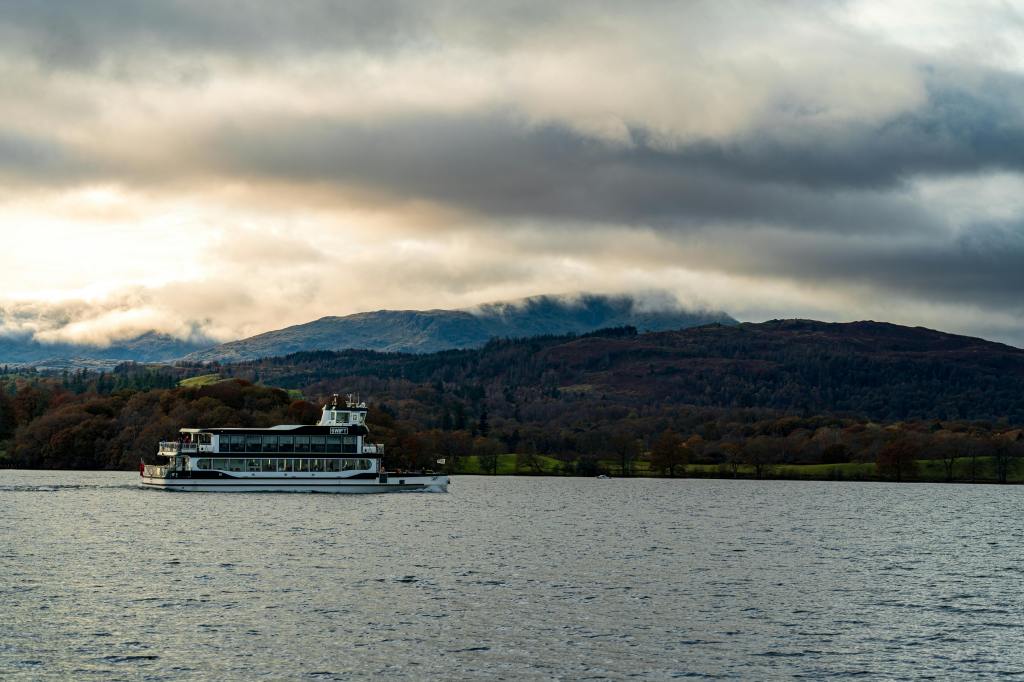
Most people, when stopped in the street – if they can be, what with the pace of modern life so hatefully overwrought, so essentially lacking any time for appreciation of beauty, wonder, awe – would say “I haven’t really thought much about that” if asked what the likelihood is that England’s watercourses are brimming with cryptozoological monstrosities.
But the earth’s wet districts are awash with such tales, so they are. Sea sailors, river traders and lake pirates of all eras and shapes have reported encounters with rising, looping serpents, dun, spiked leviathans and mysterious waterborne folk.
Lake Windermere: 800 square miles of prime water hectarage, shimmer-flapping in northern England’s icy zephyrs. For many a century, the serene basin caused little alarm. The famous philanthropic criminal Robin Hood is said to have learned to drink in the lake’s white waters; radio’s Simon Bates would fish for vital sustenance from its scrubby banks when out of work. So, where’s all this going, then?
Muttley Davenport was a medium-sized man with big arms, small hands, average feet, a decent torso, a good knee, a bad knee, wobbly ankles and well-kept toes. Trained from boyhood as a boatist, the flesh-composed person earned the money he used to support himself by ferrying tourists over Windermere’s sweet-natured surface, gently gliding his vessel to allow his customers to take photographs of things they felt strongly enough about to record to film, for all the good it ultimately did them.
One sedate afternoon, as terns turned above and dabs dabbled below, Davenport beheld a curious occurrence off-left of stern to port side. Dashing to the poop deck, the bewildered skipper handle-swished his eye-lengtheners (binoculars) up to face-midpoint, and glared, aghast. Off starboard, or so it seemed, was a multi-long swimming thing, water-buoyed and bountiful. Moved to tears by the mercurial beauty of the curiosity, Davenport kept his own counsel and returned to shore a changed man. He married well, three times, birthing three score and ten child-ren, and raised a happy farm-stead that produced excellent beetroot. Only on his deathbed did he reveal the details of his experience, and even then only to a plumber who was fixing a tap in his magnificent death chamber. And it was he, Colin Hump, the plumber, who passed the tale onto the British Institute of Impossible Animals. And it was they, the BIOIA, who wrote the story down and published it in a book called The British Institute of Impossible Animal’s Guide to Impossible Animals of the British Isles. And that is how – as many now agree – information is often passed around.
Anyhow, it’s not all delightfully happy endings where outrageous water beasts are concerned. Not a fucking chance. In 1904, Camping and More Camping reported:
“An enormous water beast – that was thought to be long dead – has sunk the parish’s largest war vessel.
“The SS Ghuy Harris was on routine patrol duties on Eastbourne’s Gruel Lake on Monday night when it was struck by the prehistoric monstrosity.
“The giant aqua menace – which is estimated to be over 200ft long – was declared dead in 1800 after the lake was fumigated with a massive blast of tainted laudanum.
“No corpse ever surfaced but the gruesome fish hadn’t been sighted since.
“Now natural philosophers from the village’s water squad believe it may have been in hibernation.
“The SS Ghuy Harris went down with over 80 crew – and rescue teams were still pulling chewed bodies from beneath the vast pool’s sparkling surface as we went to press.
“Early reports indicate that the nautical nightmare speared the battle boat with its mighty tusks, before wrapping its snake-like length around the stricken vessel and dragging it down into the murky depths.
“Police horse boats scattered depth charges in a tokenistic and futile response.
“Officials have now closed the lake to the public but have insisted that this Saturday’s children’s regatta will go ahead as planned.
“The SS Ghuy Harris was launched by the then Eastbourne Mayor Silas Halt in 1868, hours before the now disgraced former official was arrested on fraud charges.
“It saw extensive action in the Great Separatist War of 1887, when southern Eastbourne rebels tried to seize Gruel Lake’s peanut oil marina.”
 Mysterious EnGland
Leave a comment